1
Determ
Media intelligence for PR teams: news and social in one feed
Best for: In-house comms teams and boutique agencies that want news and social with a published price
Pricing: From $99/mo (billed monthly) or $990/yr
Free option: 5-day free trial, no credit card
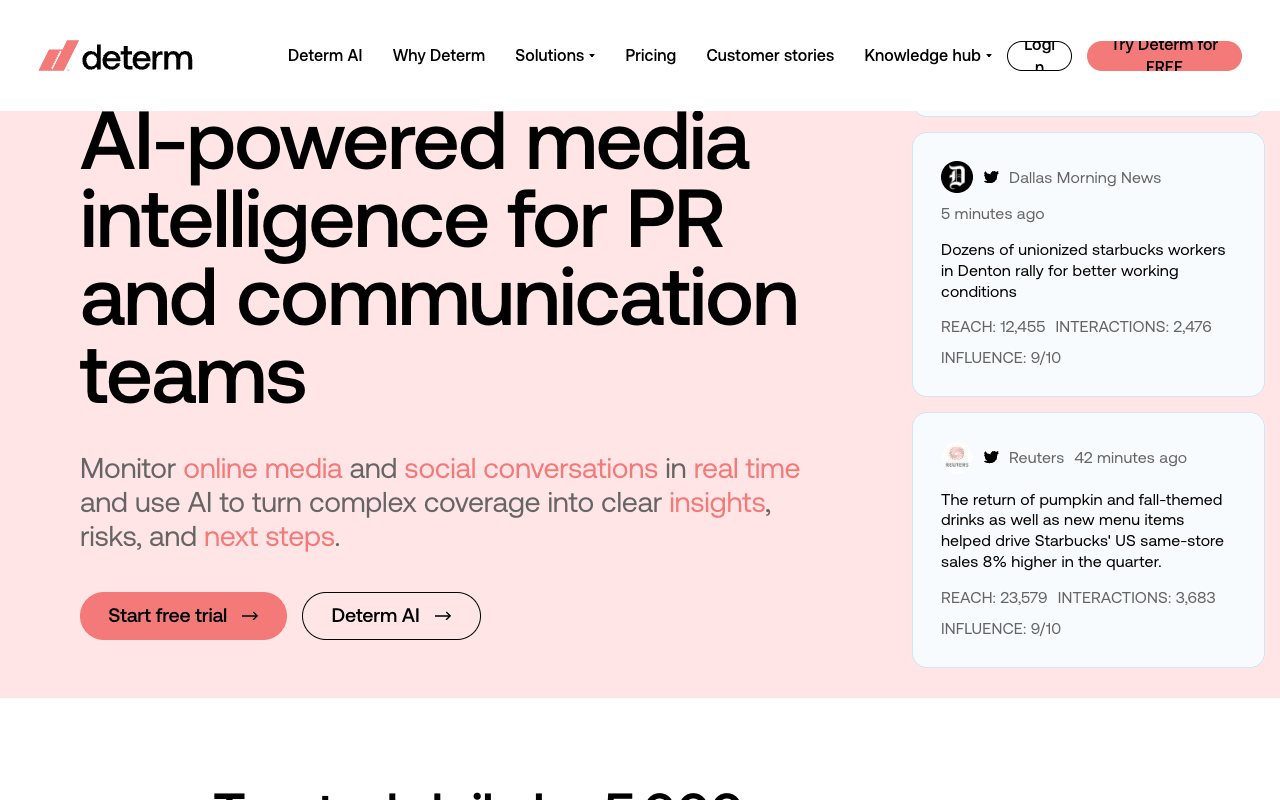
Determ describes itself as AI-powered media intelligence for PR and communication teams, and it is one of the few listening tools whose pitch starts with PR. It monitors online news across 100M websites alongside Facebook, Instagram, X, YouTube, Reddit, Bluesky, Medium, blogs and forums, so news and social sit in one feed, with print, TV and radio in some regions. For crisis work it sends real-time alerts, daily digests, and spike alerts on both volume and sentiment. Reports export to Excel, PDF and PowerPoint, including a board-ready executive summary, and every plan has unlimited users. Focus costs $99 a month billed monthly or $990 a year for 1 topic and 1,000 mentions. Expand is $299 a month with a yearly commitment, or $2,990 a year, for 5 topics and 5,000 mentions. The tradeoffs: mention caps are tight on the lower plans, the two larger plans need a yearly commitment even when billed monthly, and print and broadcast depend on your region.
For PR teamsGive each client or executive its own topic, route spike alerts to the account lead, and export the board-ready summary for the monthly report.
Pros
- Built for PR and comms teams, with news and social together
- Spike alerts on volume and on sentiment
- Board-ready executive summary and PowerPoint exports
- Unlimited users on every plan
Cons
- Mentions capped per plan (1,000 to 10,000)
- Expand and Command need a yearly commitment
- Print, TV and radio have regional availability
2
Brand24
Self-serve listening across social, news, podcasts and more
Best for: Small agencies and lean teams that want to start this week without a sales call
Pricing: From $199/mo (billed annually) or $249/mo monthly
Free option: 14-day free trial, no credit card
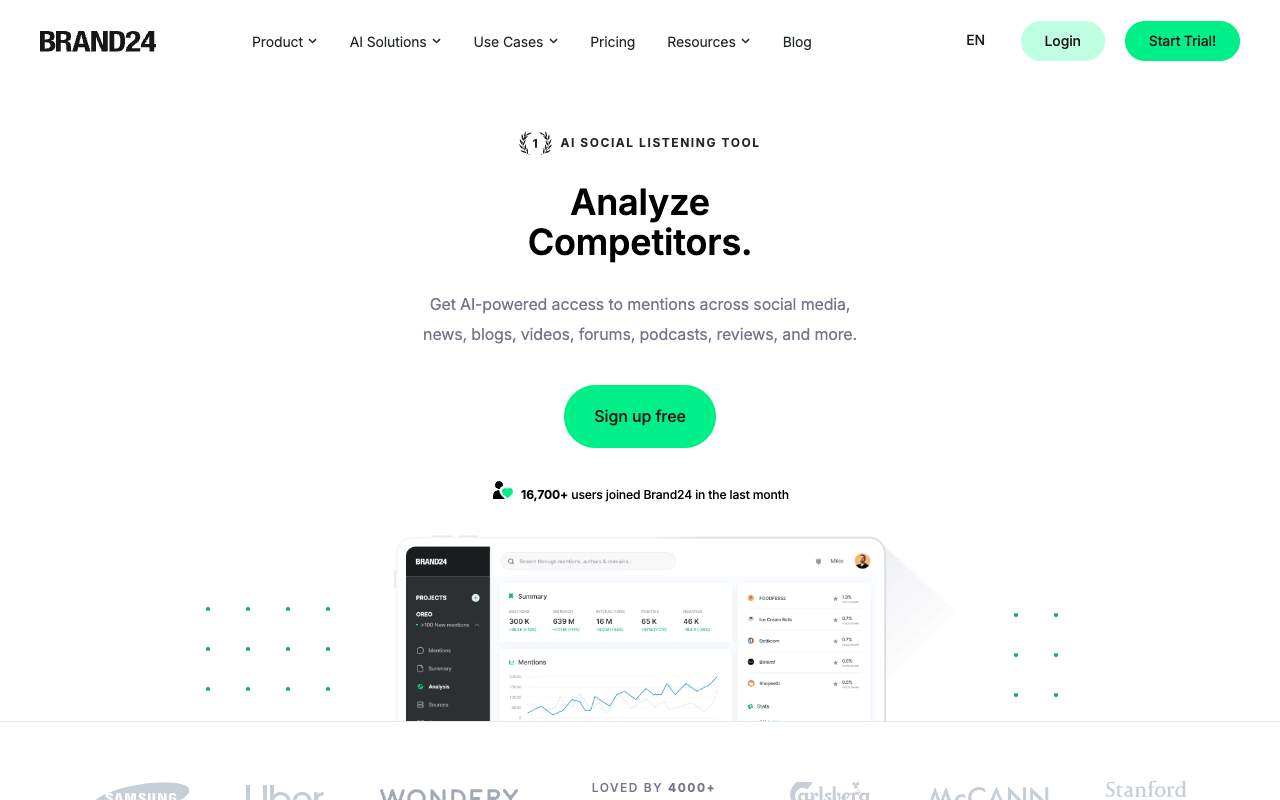
Brand24 is self-serve listening with one of the longest published source lists on this page: Facebook, Instagram, X, TikTok, LinkedIn, Reddit, YouTube, news, blogs, podcasts, newsletters, reviews, Twitch and more. For PR it offers Storm Alerts, Slack and Microsoft Teams notifications, Boolean search, and white-labelled PDF, Excel and PowerPoint reports, plus AVE, reach tracking and influencer analysis. Pricing is on the page. Individual is $199 a month billed annually ($249 monthly) for 3 keywords, 2,000 mentions, one user and updates every 12 hours. Realtime updates start on Pro at $399 a month billed annually, which Brand24 calls ideal for small agencies, and Business at $599 adds Advanced Reports. The trial needs no credit card, and standard plans carry a money-back guarantee within 30 days of purchase. The tradeoffs: the entry plan's single user and 12-hour updates are too slow for crisis work, realtime needs Pro, and Advanced Reports start on Business, so agencies usually land on one of the upper plans.
For PR teamsTrack each client and its competitors as keywords, push Storm Alerts into the agency Slack, and send a white-labelled PowerPoint at month end.
Pros
- Published prices with monthly and annual options
- Sources include TikTok, LinkedIn, podcasts and newsletters
- White-labelled PDF, Excel and PowerPoint reports
- Slack and Microsoft Teams alerts
Cons
- Individual plan updates every 12 hours, one user
- Realtime updates start at $399/mo (Pro, billed annually)
- Advanced Reports only on Business ($599/mo annual) and up
3
Meltwater
Media, social and consumer intelligence in one PR suite
Best for: Agencies and enterprise comms teams that want earned and social under one contract
Pricing: Quote only
Free option: Demo only (no self-serve trial)
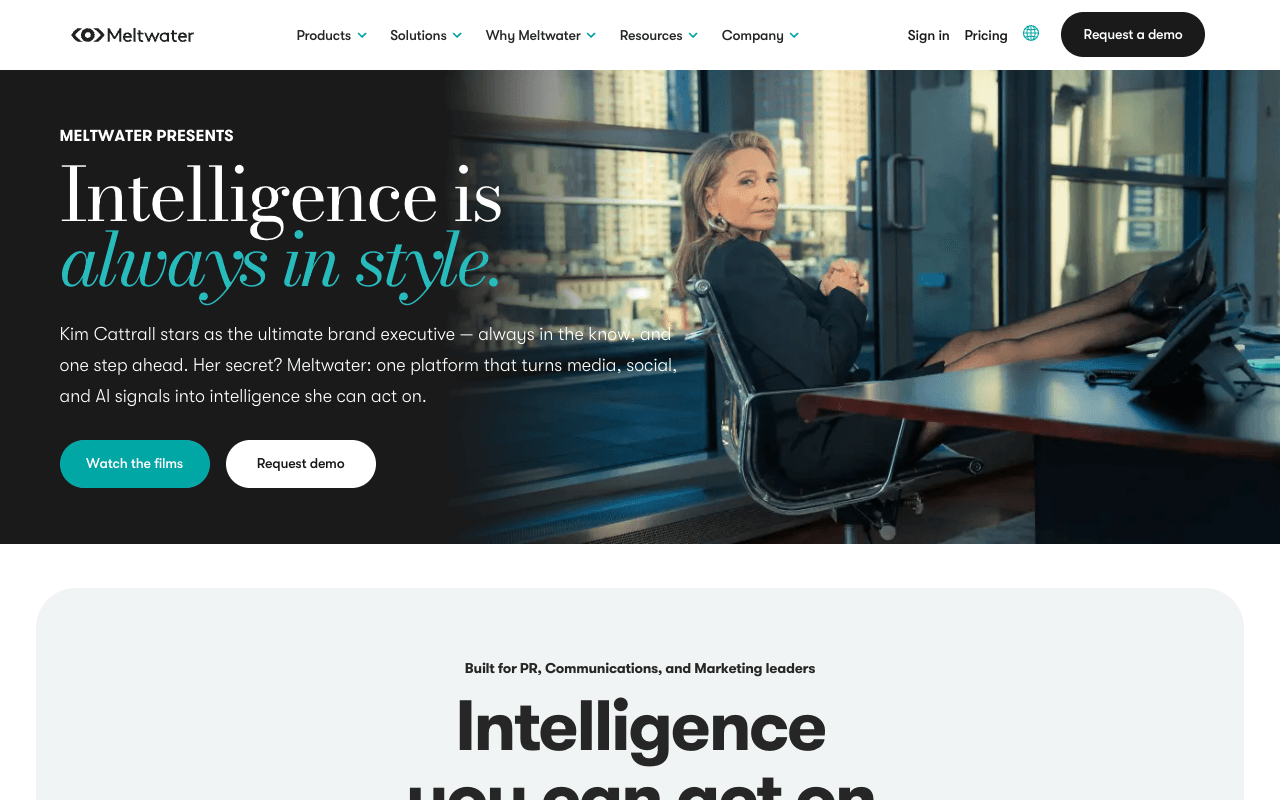
Meltwater suits teams that want earned media and social in one contract. Every plan (Starter, Pro, Enterprise and Agency) lists social listening, media intelligence, media relations and AI visibility tracking as capabilities you choose from. Social sources include Instagram, TikTok, Facebook, X, Reddit and YouTube, alongside news, blogs, forums, review sites and podcasts, and its consumer intelligence page adds broadcast. Alerts trigger instantly when your criteria are met, sentiment covers 100+ languages, and editorial history goes back to 2009. The Agency plan adds governance, workflows and permissions for multiple clients, and Enterprise and Agency include API and MCP integrations. The tradeoffs are about buying: pricing is tailored and quote only, most contracts are annual with a 12-month minimum, there is no self-serve trial, only a guided demo, and social history is a rolling 15 months. Ask for the renewal notice window and any onboarding fees in writing before you sign.
For PR teamsWatch a client's social conversation and press coverage in one place, then hand off to the media relations tools when a story needs a pitch.
Pros
- Social, news, podcasts and broadcast in one suite
- Media relations available on every plan
- Agency plan with governance and permissions
- API and MCP integrations on Enterprise and Agency
Cons
- Quote only; most contracts have a 12-month minimum
- No self-serve trial, demo only
- Social history is a rolling 15 months
4
Lumen by Talkwalker (Hootsuite)
Enterprise listening across 150M+ sources, now part of Hootsuite
Best for: Large comms teams and global agencies that need the widest source coverage
Pricing: Quote only
Free option: Demo (Hootsuite self-serve plans have a 14-day trial)
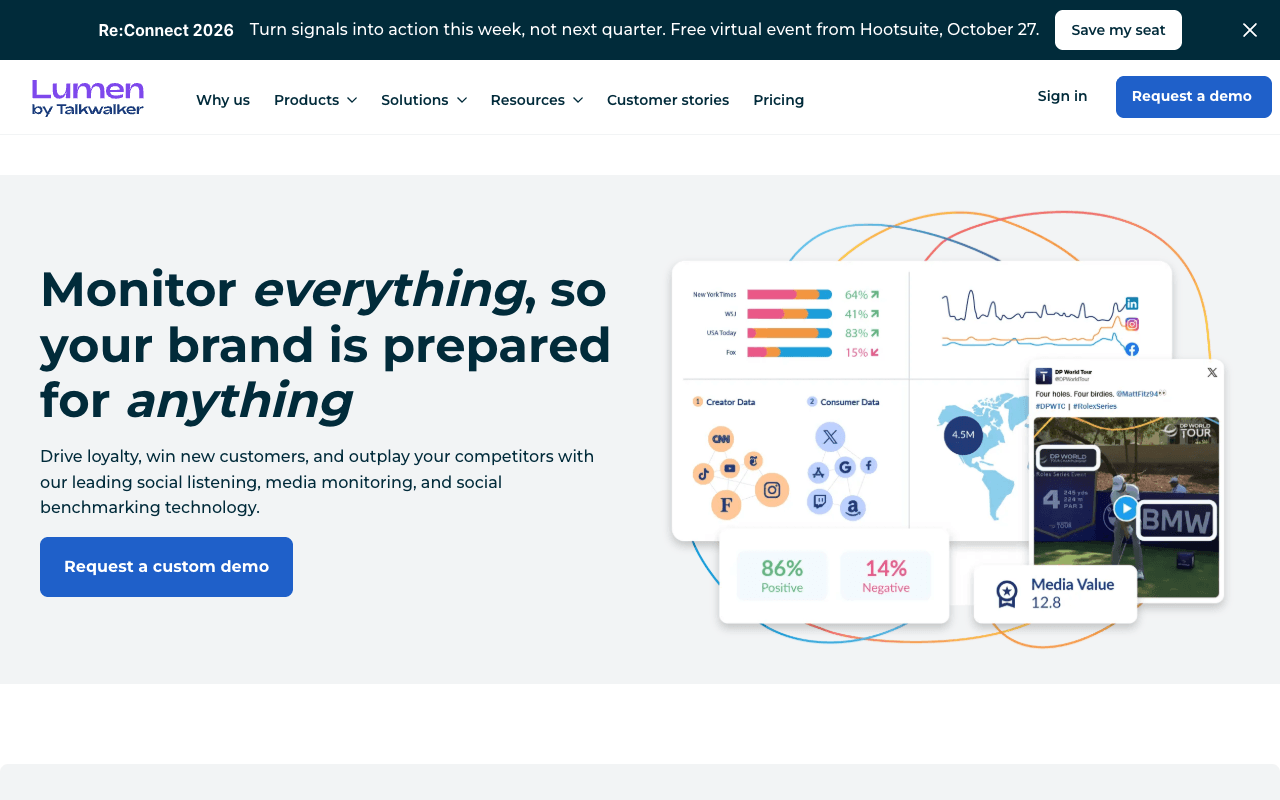
Talkwalker is now Lumen by Talkwalker. Hootsuite acquired Talkwalker in April 2024 and sells Lumen by Talkwalker as its enterprise-tier listening. By stated reach it is the broadest listening on this list: 150+ million sources and 30 social networks, plus online, print and broadcast media, with mentions found in videos, images and podcasts, including your logo. Its FAQ says it tracks hashtags on TikTok. For PR it offers real-time custom alerts pitched at spotting a crisis as it forms, custom scoring for share of voice and sentiment, an influencer finder for journalists and publications, and daily, weekly or monthly AI summaries. PR and agencies are named use cases. The tradeoffs: all three Lumen plans (Core, Analyze, Business) are quote only, though each includes unlimited users. Inside Hootsuite, Talkwalker-powered listening is for Enterprise customers; self-serve plans start at $99 per user a month billed annually and include basic listening. Hootsuite's pages quote both 13 and 24+ months of history, so confirm the lookback in your quote.
For PR teamsSet crisis alerts across every market a global client operates in, and use the AI summaries for the weekly executive briefing.
Pros
- 150M+ sources, 30 social networks, print and broadcast
- Finds logo and brand mentions in images, video and podcasts
- Influencer finder for journalists and publications
- AI summaries for daily, weekly and monthly reports
Cons
- Quote only on all three Lumen plans
- Inside Hootsuite, Talkwalker-powered listening is Enterprise only
- Hootsuite's pages disagree on history (13 vs 24+ months)
5
Pulsar
Audience intelligence with a crisis monitor built for comms
Best for: Comms teams that manage reputational risk and want narrative-level crisis alerts
Pricing: Quote only
Free option: Demo only
Pulsar is an audience intelligence and listening platform, part of Pulsar Group alongside Vuelio, Isentia and ResponseSource. Its standout for PR is Crisis Oracle, which scans your brand data 24/7 and, in Pulsar's words, alerts only when something changes: hourly notifications when a risk escalates or eases, plus daily digests. Pulsar says Crisis Oracle is built for how PR and comms teams actually work, and fewer, more meaningful alerts is what PR teams ask listening tools for. TRAC, the core listening product, covers social from Instagram to Pinterest and Twitch, plus online news, print, TV, radio and podcasts, across 195 countries including Weibo, Little Red Book and WeChat. Reports can be custom-designed and delivered automatically. The tradeoffs: there are no published prices and no advertised trial, so expect a sales process, and Crisis Oracle is a separate product from TRAC, so ask what each costs.
For PR teamsRun Crisis Oracle on a client with known risks, and get an hourly note only when an issue escalates or calms down.
Pros
- Crisis alerts that fire on escalation or de-escalation
- News, print, TV, radio and podcasts beside social
- Coverage of Chinese platforms such as Weibo and WeChat
- Automated delivery of custom reports
Cons
- Quote only, no trial advertised
- Crisis Oracle and TRAC are separate products
6
Awario
Low-cost brand monitoring with generous mention limits
Best for: Freelancers and small agencies reporting to clients on a tight budget
Pricing: From $29/mo (billed annually) or $49/mo monthly
Free option: Free trial of the Starter plan, no credit card
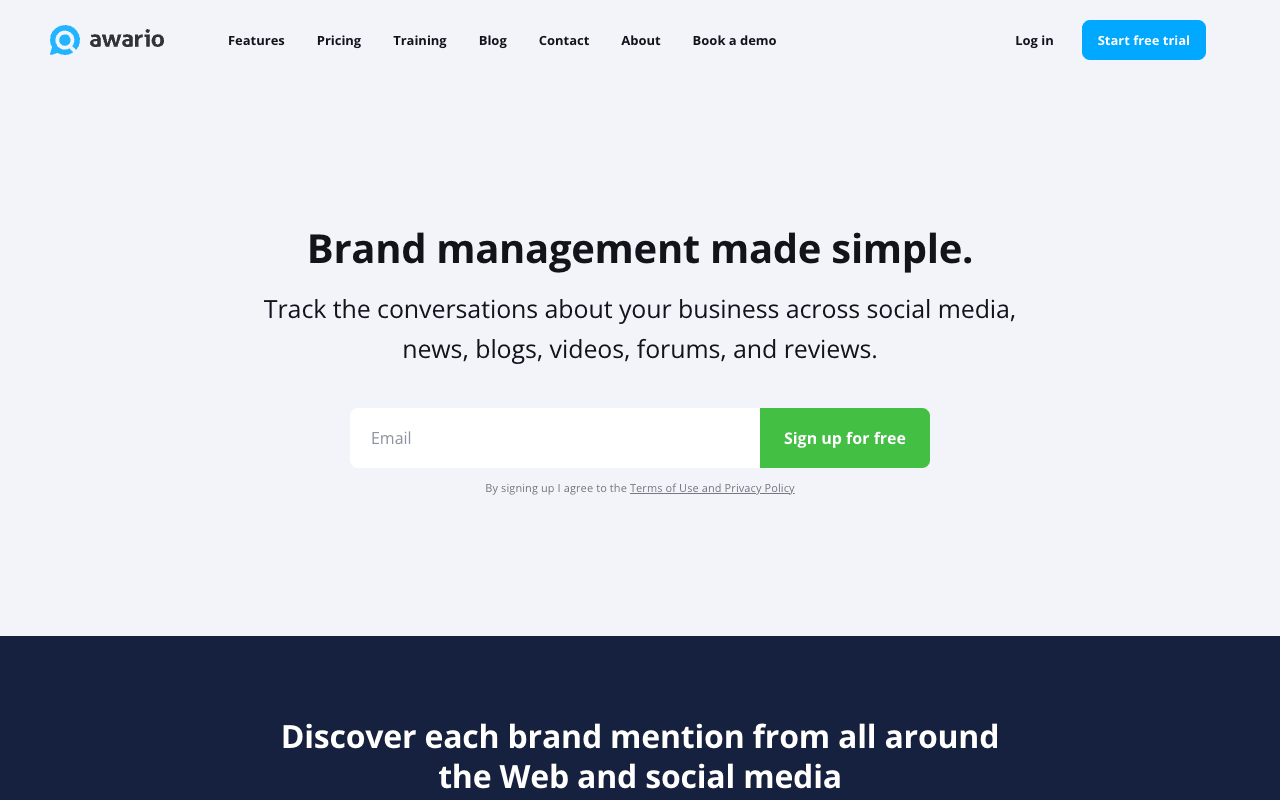
Awario is the low-cost pick on this list. It tracks X, Facebook, Instagram, Reddit, YouTube, Vimeo, news, blogs, forums and the wider web, with unlimited keywords per topic, Boolean search on every plan, sentiment and influencer identification. Starter is $29 a month billed annually ($49 monthly) for 3 topics, 30,000 new mentions a month and one team member. For client work, Pro is the realistic floor: $89 a month billed annually ($149 monthly) adds PDF reports and CSV export, with 15 topics, 300,000 mentions and 10 team members. White-label reports with your or a client's branding, plus API access, come with Enterprise at $249 a month billed annually ($399 monthly). The trial gives you the Starter plan with no credit card. The tradeoffs: the homepage source list doesn't name TikTok, LinkedIn, print or broadcast, Starter has no reports or data export, and white-label reports need the top plan.
For PR teamsPut each small client on its own Pro topic and send the monthly PDF report; move to Enterprise when clients expect your branding on it.
Pros
- Lowest published entry price on this page
- Unlimited keywords per topic, Boolean search on every plan
- PDF reports and 10 users on Pro ($89/mo, annual)
- Free trial with no credit card
Cons
- Starter has no PDF reports or data export
- White-label reports only on Enterprise ($249/mo, annual)
- Homepage source list doesn't name TikTok or LinkedIn
7
Onclusive Social (formerly Digimind)
Social listening inside a media monitoring and PR measurement company
Best for: PR teams that report social alongside print and broadcast coverage
Pricing: Quote only
Free option: Demo only
Onclusive Social is the social listening platform formerly known as Digimind, now part of Onclusive, a media monitoring and PR measurement company. That pairing is the point for PR teams that report earned and social together. Company-wide, Onclusive says it covers 3M+ online sources, 70K+ print outlets, 6K+ broadcast channels and 25+ social platforms, and the listening product names Facebook, Instagram, TikTok, Threads and LinkedIn. For issues work it sends instant alerts on spikes in negative sentiment, keywords, topics or hashtags, with always-on Sentinel monitoring and 24 months of historical data. Its PR pitch is to monitor coverage, measure results and show the real value of communications. The tradeoffs: pricing is quote only through a demo, and the print and broadcast figures describe Onclusive as a whole, so confirm which sources come with the social listening product you are quoted.
For PR teamsAlert on negative-sentiment spikes for a client, then report social and broadcast results side by side in the quarterly review.
Pros
- Alerts on negative-sentiment, keyword and hashtag spikes
- 24 months of historical data
- Names TikTok, Threads and LinkedIn as sources
- Sits beside print and broadcast monitoring
Cons
- Quote only, demo required
- Print and broadcast figures are company-wide, not per product
8
Brandwatch
Consumer intelligence with a social archive back to 2010
Best for: Enterprise comms and insights teams that need deep history and image analysis
Pricing: Quote only
Free option: Demo only
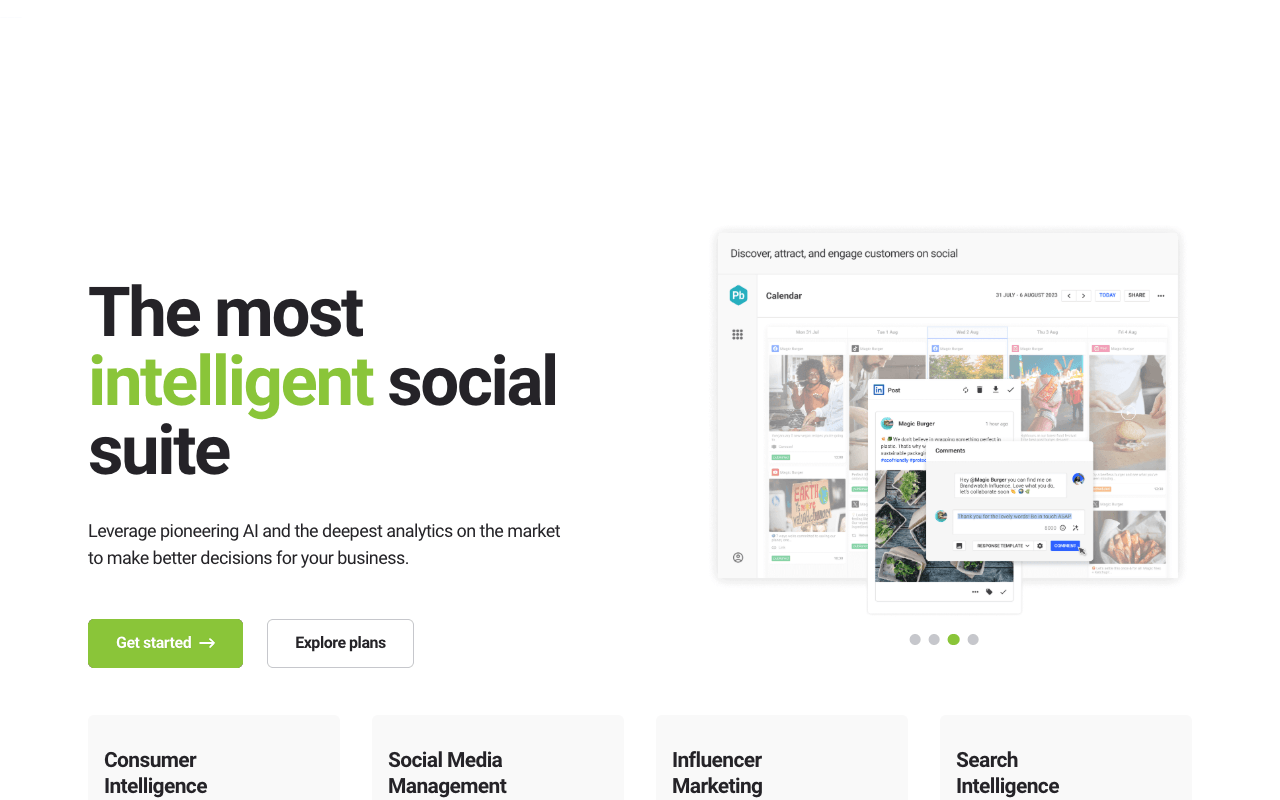
Brandwatch is the research-grade option: conversations from 100 million unique sites, with 1.7 trillion historical conversations back to 2010, which matters when a client asks how a topic has moved over years rather than weeks. It flags unusual activity or emerging crises with real-time alerts that can go straight to internal and external stakeholders, and its image analysis finds objects, scenes, actions and logos in images. It also has Iris, an AI assistant, and an influencer database of over 30m creators. Brandwatch is part of the Cision group of brands, and its PR and comms page pitches Cision plus Brandwatch for print, online, broadcast and social together. The tradeoffs: pricing is quote only across standard to enterprise plans, there is a demo rather than a trial, and its own pages describe history differently (10 years on one page, back to 2010 on another), so confirm the archive in your quote.
For PR teamsPull years of conversation history before a sensitive announcement, and route crisis alerts to the client's own comms lead.
Pros
- Archive back to 2010 across 100 million sites
- Crisis alerts can go to external stakeholders
- Image analysis finds logos and scenes
- Influencer database of over 30m creators
Cons
- Quote only, demo instead of a trial
- Its pages describe history differently, so confirm the archive
9
Sprout Social Listening
Listening add-on to Sprout's social media management suite
Best for: Comms teams whose social team already publishes and reports in Sprout
Pricing: Add-on, price not published (Standard plan $199/seat/mo, billed annually)
Free option: 30-day free trial of Sprout, no credit card
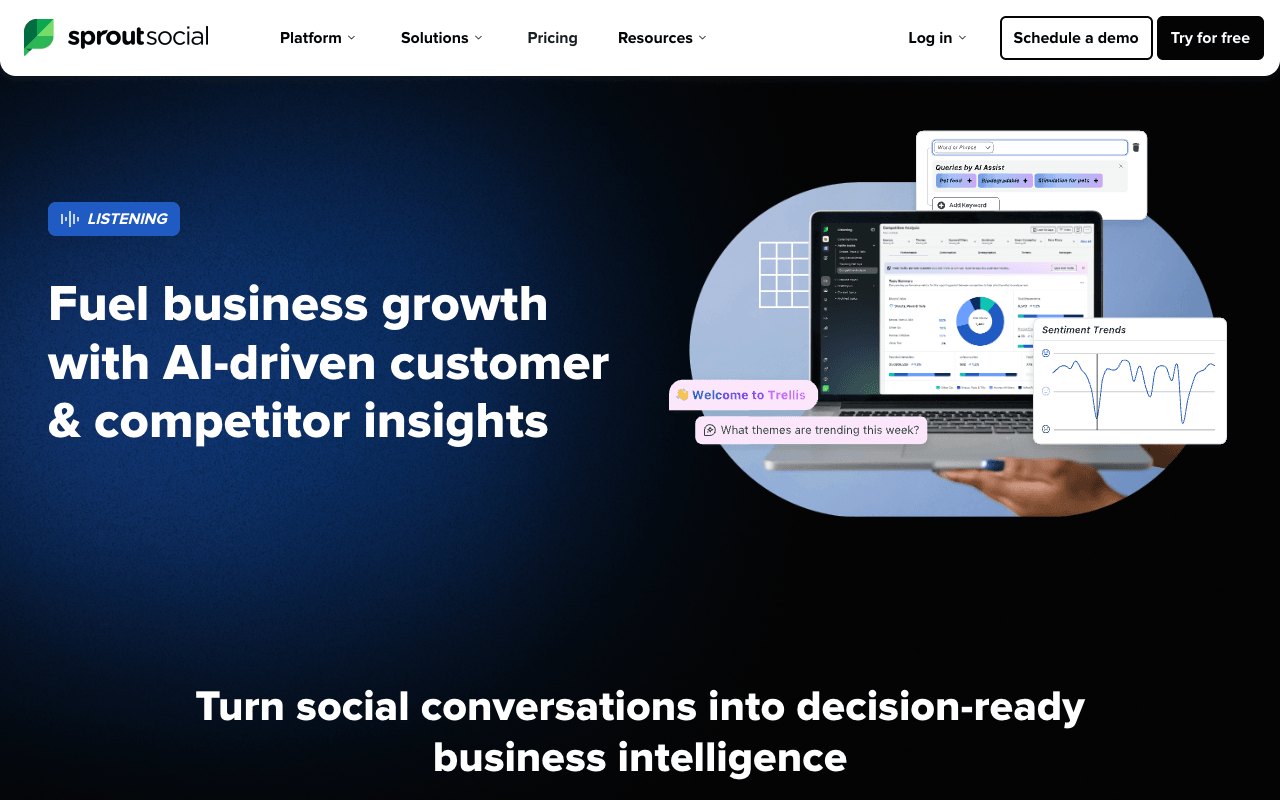
Sprout Social is a social media management suite, and Listening is an add-on available on the Standard plan and up. If your social team already publishes and reports in Sprout, adding Listening keeps the data in one place. Sources include X, TikTok, Bluesky, Reddit, Tumblr, Facebook public pages, Instagram hashtags, YouTube titles and descriptions, and LinkedIn mentions on your own pages, with AI spike alerts on volume, impressions, engagement or sentiment, share of voice in competitor comparisons, and share links for stakeholders. Sprout also bought NewsWhip in July 2025. NewsWhip by Sprout watches news and social signals to forecast which stories will drive attention, up to 24 hours out, which helps an issues team decide what to prepare for. Seats cost $199 a month on Standard and up to $399 on Advanced, billed annually. The tradeoffs: Listening and NewsWhip prices aren't published, and per-seat pricing adds up for a large agency team.
For PR teamsAdd Listening to the Sprout account the social team already runs, and share spike alerts and competitor charts with the comms lead.
Pros
- Sits inside the publishing and reporting tool many teams already use
- AI spike alerts on volume, engagement or sentiment
- Share of voice in competitor comparisons
- NewsWhip forecasts which stories will take off
Cons
- Listening and NewsWhip prices not published
- Add-on only on Standard ($199/seat/mo, annual) and up
- Per-seat pricing