1
Muck Rack Generative Pulse
Muck Rack's AI visibility product for PR and comms teams
Best for: PR teams that pitch from Muck Rack and want to know which reporters AI cites
Pricing: Quote only
Free option: Free brand preview snapshot; demo on request
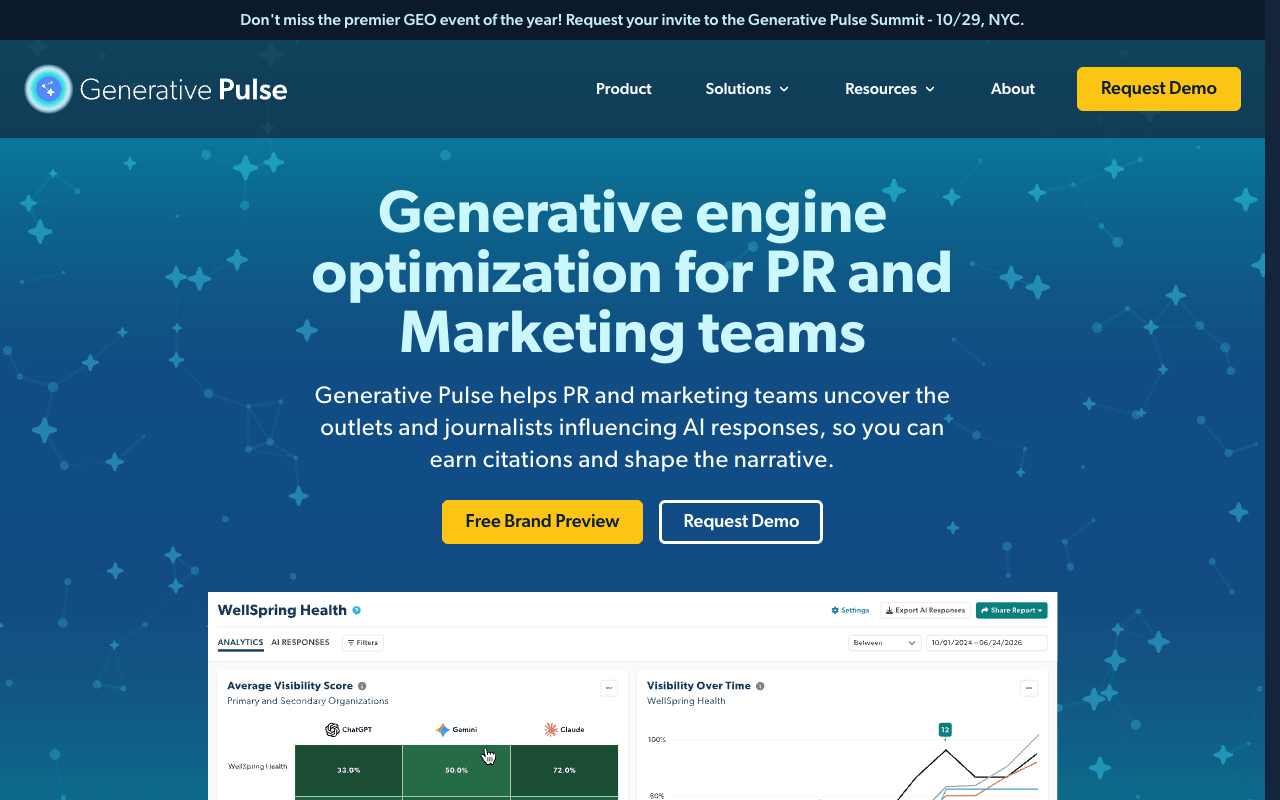
Generative Pulse is Muck Rack's AI visibility product, and the most PR-native tool on this list. It tracks prompts across AI platforms (its site names ChatGPT, Gemini and Claude among "all major LLMs"), filters by prompt, campaign and platform, and compares share of voice and sentiment against competitors. It goes a level deeper than most trackers: it identifies the individual journalists whose work AI cites most, and links specific coverage to increases in AI citations, which is the proof point a PR team wants in a client report. Because it sits inside Muck Rack, cited journalists can go straight into a Muck Rack media list and get pitched from the same place, and reporting exports for clients, executives and stakeholders. The tradeoff is cost visibility: Muck Rack doesn't publish prices, so expect a sales conversation. A free brand preview gives you a snapshot first.
For PR teamsPull the journalists AI cites most for your category into a Muck Rack list and pitch them, then show the client which coverage moved AI citations.
Pros
- Names the individual journalists AI answers cite
- Links specific coverage to increases in AI citations
- Cited journalists go straight into Muck Rack media lists
- Exports reports for clients, executives and stakeholders
Cons
- No public pricing; Muck Rack quotes custom pricing
- The pitching loop runs inside Muck Rack, so it fits existing users best
2
Profound
Enterprise AI visibility platform with a PR and brand solution
Best for: Enterprise comms teams and agencies that need wide engine coverage
Pricing: Custom (brands); agencies from $99/mo + $399/mo per client
Free option: 7-day free trial (50 fixed prompts daily, 3 engines)
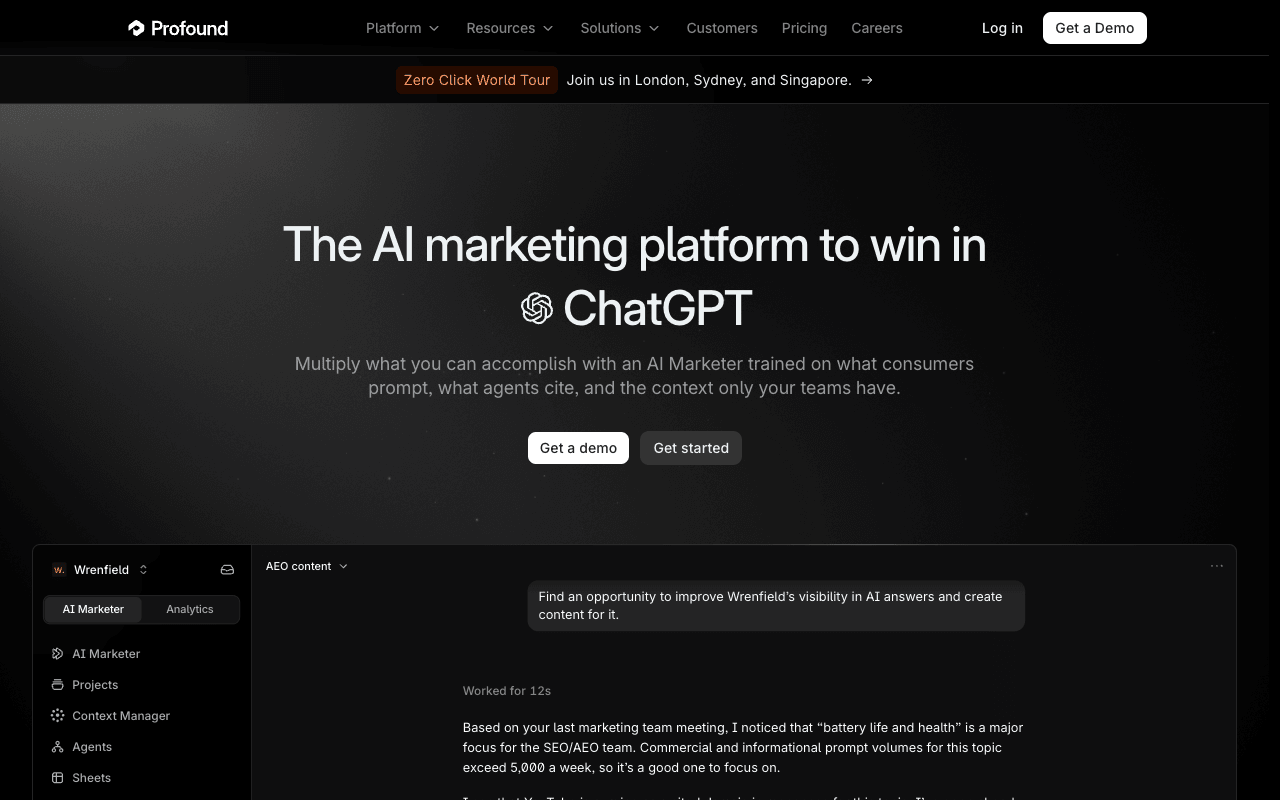
Profound is an enterprise AI visibility platform with a dedicated solution page for PR and brand teams. It shows which domains are cited when AI mentions your brand, tracks citations, sentiment, ranking and competitive presence, and points you to the authors of top-cited articles in your category so you can tailor outreach to them. Enterprise plans track up to 9 answer engines, including ChatGPT, Perplexity, Gemini, Google AI Overviews, AI Mode, Microsoft Copilot and Claude, with CSV and JSON exports, an API and SSO. Agencies get an agency mode: Agency Growth is $99/month for 10 pitch workspaces a month to audit prospects, and each ongoing client workspace costs $399/month (100 prompts, daily tracking). The tradeoff is that brand plans beyond the 7-day trial are custom-priced, and trial prompts can't be customized, so a real evaluation on your own prompts goes through sales.
For PR teamsTrack the cited domains and authors for a brand's category, then build the outreach list for the quarter from the top-cited articles.
Pros
- Dedicated PR and brand solution with author-level outreach targeting
- Up to 9 answer engines on Enterprise
- Agency mode with pitch workspaces and client workspaces
- CSV and JSON exports plus API on Enterprise
Cons
- Brand plans are custom-priced after the trial
- Each agency client workspace is $399/month
- Trial prompts are fixed, not your own
3
Peec AI
AI search analytics with public brand and agency pricing
Best for: Agencies tracking several clients on a published, self-serve budget
Pricing: From $95/mo, or $80/mo billed annually (50 prompts)
Free option: Free trial, no credit card
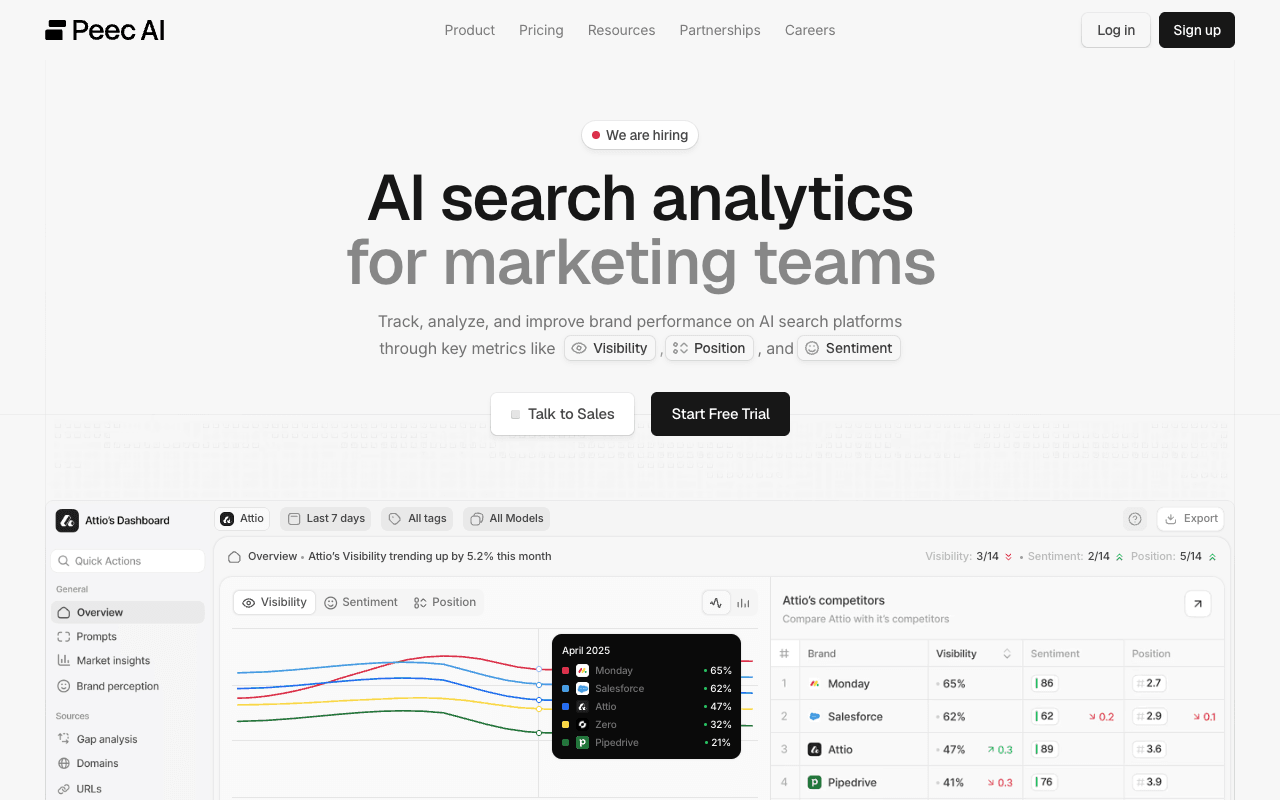
Peec AI is a self-serve AI search analytics platform with public prices for both brands and agencies. It tracks visibility, position, sentiment and share of voice daily against competitors, and its source analytics classify each cited source as competitor, editorial, reference or UGC. For PR, the editorial bucket is the useful one: it shows which press coverage the AI leans on, and a view of sources that appear often and name competitors but not you works as an outreach list. Brand plans start at $95/month ($80 billed annually) for 50 prompts with unlimited users. Agencies buy credits (1 prompt x 1 model x 1 day = 1 credit) from $245/month across 3 to 25 client projects, with 7-day pitch projects for prospects and white-label reporting. The tradeoff is engine coverage: self-serve plans track 3 models of your choice, and each extra model is a paid add-on.
For PR teamsFilter a client's cited sources to editorial, find the outlets that cite competitors but not the client, and turn that into next month's pitch list.
Pros
- Separates editorial (press) citations from competitor, reference and UGC sources
- Lists frequent sources that name competitors but not you
- Published brand and agency pricing, 15% off annually
- White-label reporting for agencies
Cons
- Self-serve plans track 3 models; extra models cost $35 to $165/mo
- Starter covers 1 project; agency projects need at least 900 credits each
4
Meltwater GenAI Lens
AI visibility add-on for Meltwater's media intelligence suite
Best for: Comms teams already monitoring news and social in Meltwater
Pricing: Quote only (add-on to a Meltwater subscription)
Free option: No self-serve trial; free guided demo
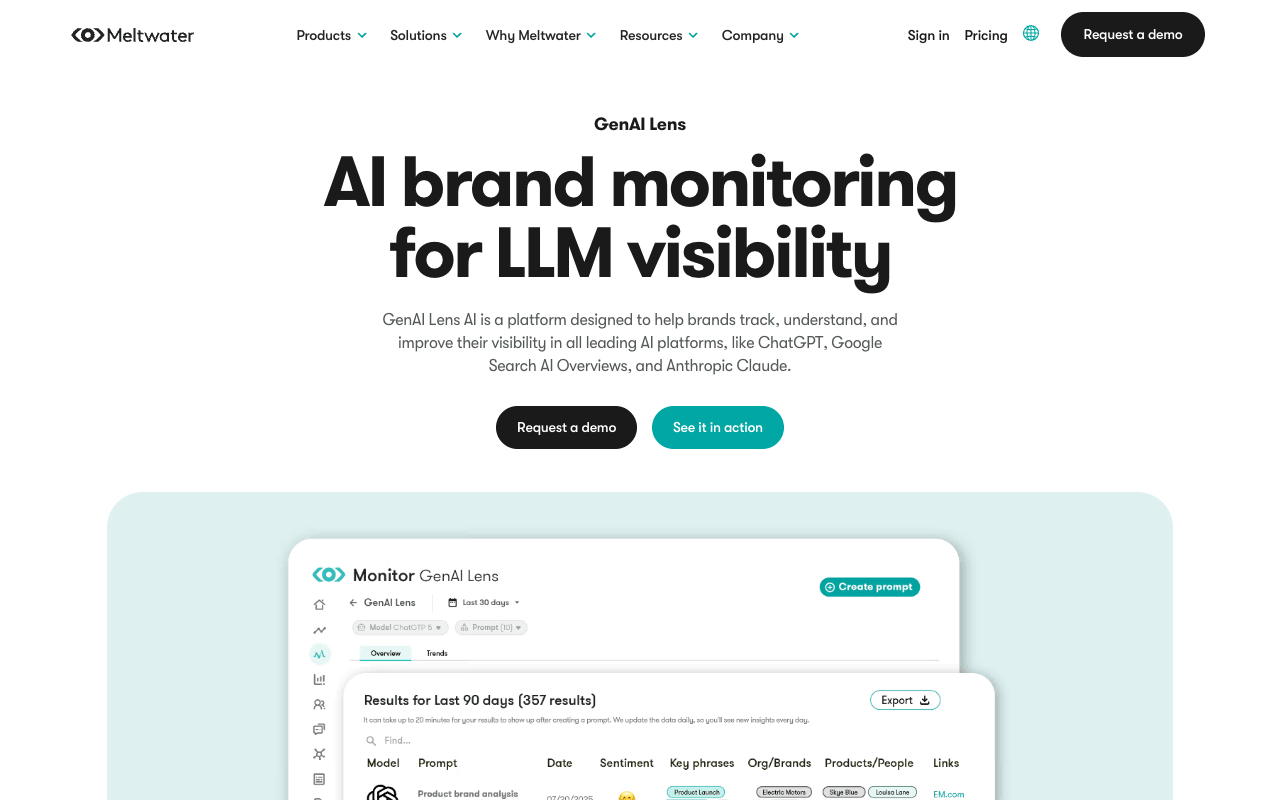
GenAI Lens is Meltwater's AI visibility product for PR and marketing teams, offered as a modular add-on to Meltwater subscriptions. It identifies the high-authority websites, sources and journalists that AI models trust, lets you add cited journalists directly to your media lists, and attributes answers to sources such as media coverage, Reddit and Wikipedia. Engine coverage is broad: ChatGPT, Perplexity, Google AI Overviews, AI Mode, Gemini, Claude, Grok, DeepSeek and Llama. You get AI share of voice and competitive benchmarking, sentiment, custom prompts, exports and, since September 2026, an alert when a tracked brand's mention-rate rank changes meaningfully. An AI Visibility API is also available. For a comms team that already runs monitoring in Meltwater, keeping AI answers next to news and social coverage is the main argument. The tradeoff: pricing is tailored, it's sold as an add-on to a Meltwater subscription, and there's no self-serve trial.
For PR teamsAdd AI share of voice and cited sources to the monthly Meltwater coverage report, and get alerted when a brand's position in AI answers shifts.
Pros
- Journalist and source-level citations next to your media monitoring
- Add journalists cited by AI directly to your media lists
- Nine engines, including Claude, Grok and Google AI Mode
- Rank-change alerts, exports and an API
Cons
- Sold as an add-on to a Meltwater subscription
- Quote only, with no self-serve trial
5
Cision AI Visibility
AI visibility inside CisionOne, built for communicators
Best for: CisionOne customers who want AI citations next to outreach
Pricing: Quote only (for CisionOne users)
Free option: Demo on request
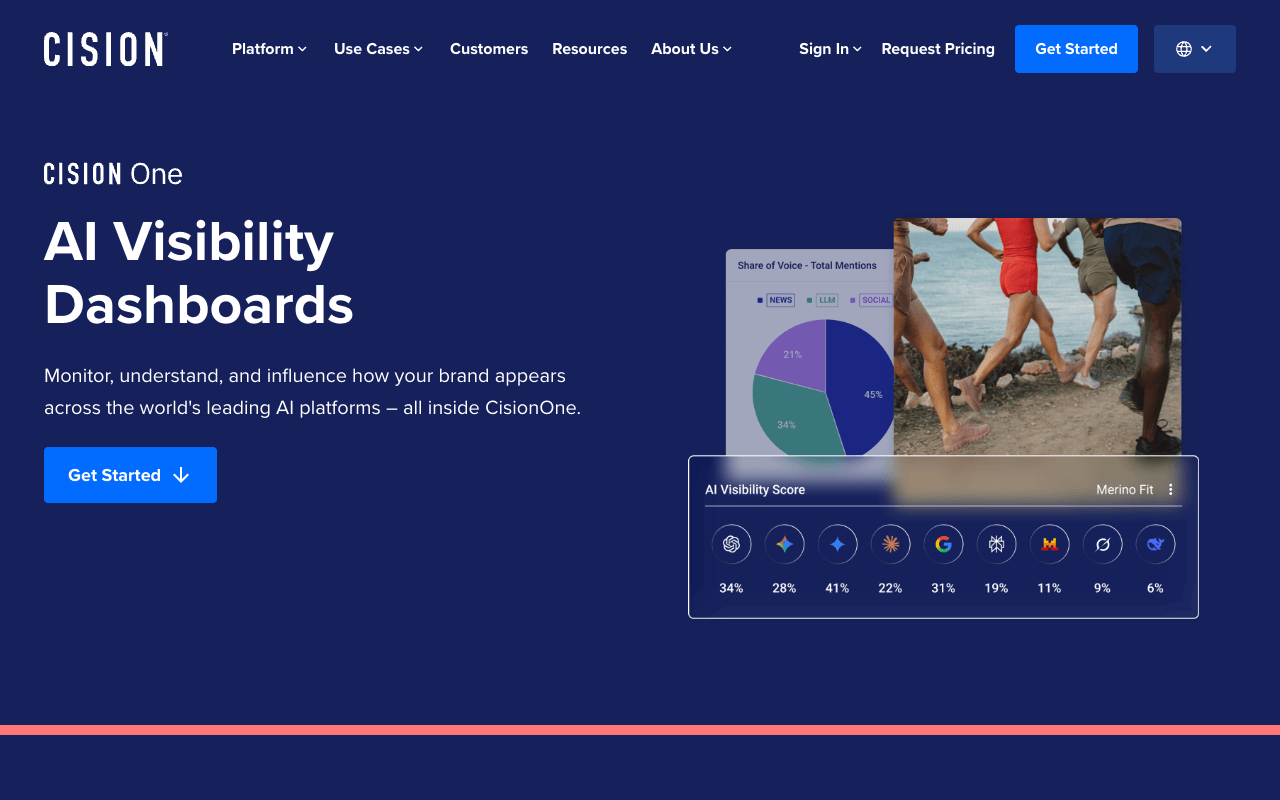
Cision launched AI Visibility inside CisionOne in July 2026, built on data from Trajaan, which Cision acquired in December 2025. Cision calls it "the AI visibility tool built for communicators," and the PR hooks are real: it shows which journalists, publications and domains are cited in AI-generated answers, and you can open a cited journalist's profile in CisionOne Outreach. It benchmarks visibility and share of voice against competitors, tracks sentiment and prompts, and reports in customizable dashboards alongside your media and social monitoring data. Engine coverage is wide: ChatGPT, Gemini, Claude, Perplexity, Grok, DeepSeek, Mistral, Google AI Overview and AI Mode. The tradeoff: it's available to CisionOne users, pricing is by request, and the product page doesn't say whether it costs extra. Cision also sells the Trajaan engine standalone as Search Intelligence, on request.
For PR teamsSpot which reporters AI answers cite for a client's category, open their profiles in CisionOne Outreach, and pitch from the same workspace.
Pros
- Shows cited journalists, publications and domains
- Cited journalists open in CisionOne Outreach
- Nine engines, including Claude and Mistral
- Reports alongside media and social monitoring data
Cons
- Available to CisionOne users; pricing by request
- Newest of the suite products (launched July 2026)
6
Onclusive GEO Analytics
GEO analytics from a media monitoring company, with public prices
Best for: In-house teams that want a PR-suite tool with published prices
Pricing: From $105/mo on an annual plan (Starter: ChatGPT, 80 prompts)
Free option: Demo on request
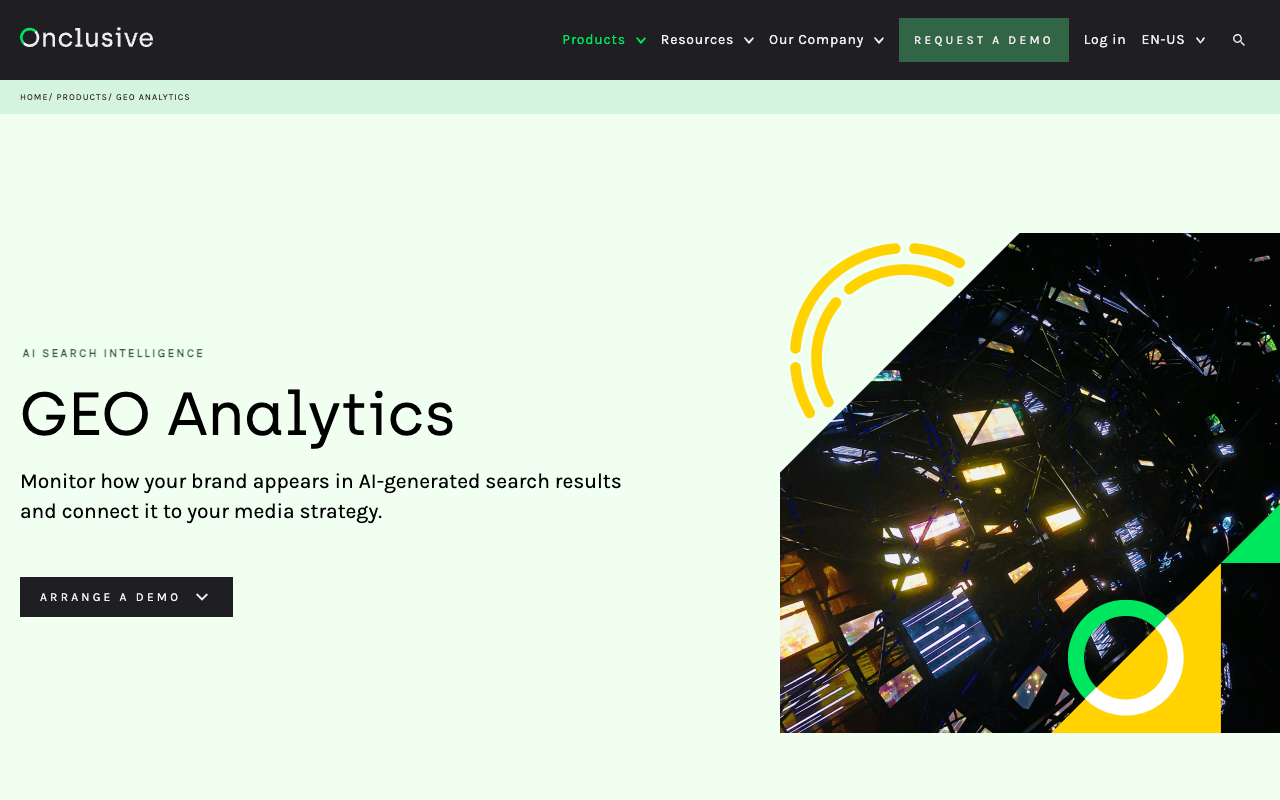
Onclusive GEO Analytics launched in the US in August 2026 and is built to connect AI visibility to your media strategy. It shows the sources AI answers cite, tracks share of voice and sentiment, sends alerts, and produces executive reports. The PR-specific feature is Priority Source Targets: the publications worth pitching, based on what the AI cites. Unlike the other PR suites here, Onclusive publishes prices, on annual plans: Starter from $105/month (1 country, ChatGPT only, 80 prompts), Essential from $280/month (ChatGPT, Perplexity and Gemini, 240 prompts), Professional from $1,255/month (3 countries, all five engines including Claude and Grok, 720 prompts), and a custom Enterprise plan. The tradeoff is that the entry plan covers only ChatGPT, full engine coverage starts at Professional, and every plan is annual.
For PR teamsUse Priority Source Targets as the starting point for a quarter's pitch list, then report AI share of voice to the exec team.
Pros
- Priority Source Targets names publications to pitch
- Published "from" prices, unusual for a PR suite
- Alerts and executive reports
Cons
- Starter tracks ChatGPT only
- All five engines start at $1,255/mo (Professional)
- Plans are annual
7
Otterly.AI
Self-serve AI search monitoring from $29 a month
Best for: Small agencies, consultants and founders starting on a budget
Pricing: From $29/mo (Lite, 15 prompts); 15% off annually
Free option: Free trial, no credit card
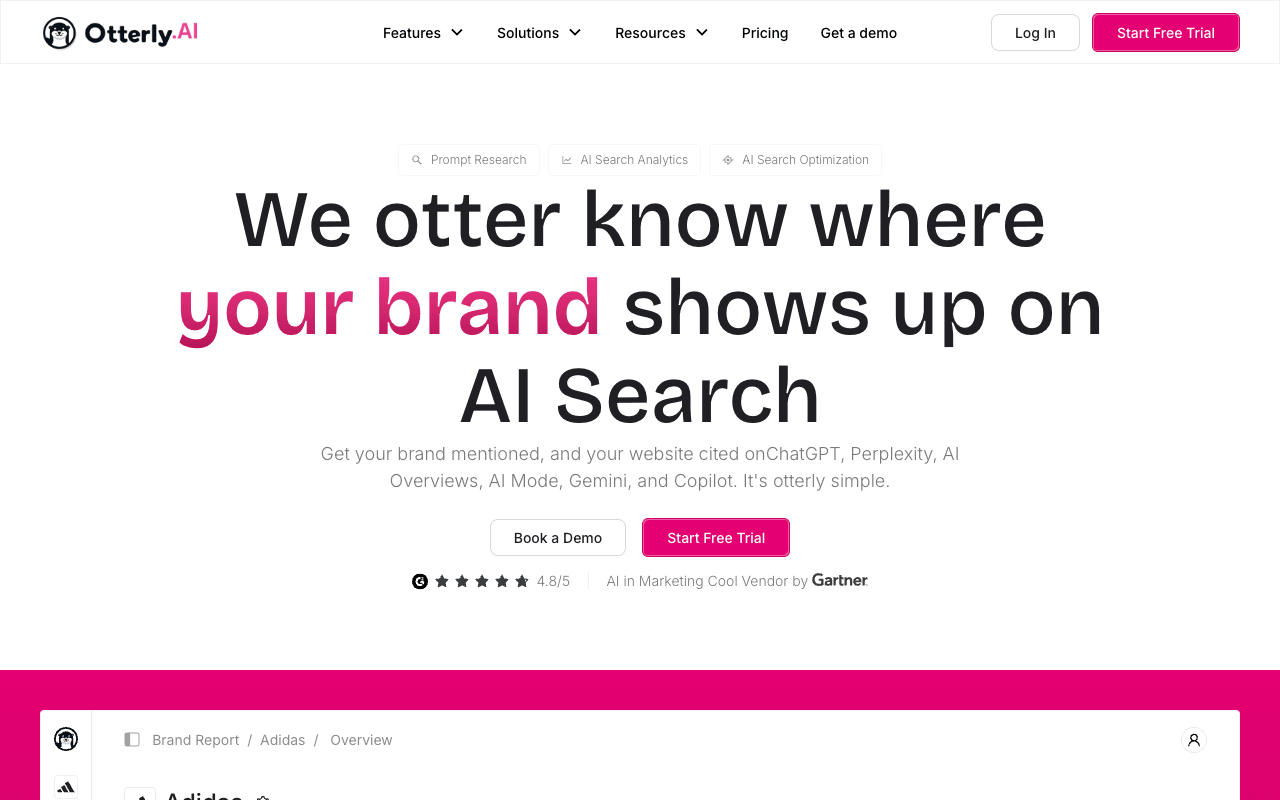
Otterly.AI has the lowest entry price on this list. Lite is $29/month for 15 prompts across ChatGPT, Google AI Overviews, Perplexity and Microsoft Copilot, with unlimited team members. It tracks brand mentions, citations, sentiment and share of voice daily against the competitors you name, and shows every cited URL, whether it names you, and which rival it names instead. Reports export to PDF or CSV and can be branded for clients. Agencies get more from Standard ($189/month, 100 prompts): unlimited workspaces, API, MCP and a Looker Studio connector, and Otterly's agency partner program adds pitch workspaces and custom Looker Studio reports with your branding. Annual billing takes 15% off. The tradeoff is the add-on model: Gemini, Google AI Mode and Claude are each paid extras priced by plan, so full engine coverage costs more than the headline price.
For PR teamsTrack a small client set on a fixed prompt list and send each client a branded PDF of mentions, citations and share of voice every month.
Pros
- Entry plan at $29/mo with unlimited team members
- Shows each cited URL and which rival it names instead
- Client-branded PDF and CSV reports
- Unlimited workspaces from Standard ($189/mo)
Cons
- Lite covers 15 prompts and 1 workspace
- Gemini, Google AI Mode and Claude are paid add-ons on self-serve plans
8
Writesonic
SEO and GEO platform with a page built for PR and brand teams
Best for: PR teams that want cited authors' contact details in the tracker
Pricing: From $79/mo, billed annually (50 prompts)
Free option: 7-day free trial, no credit card
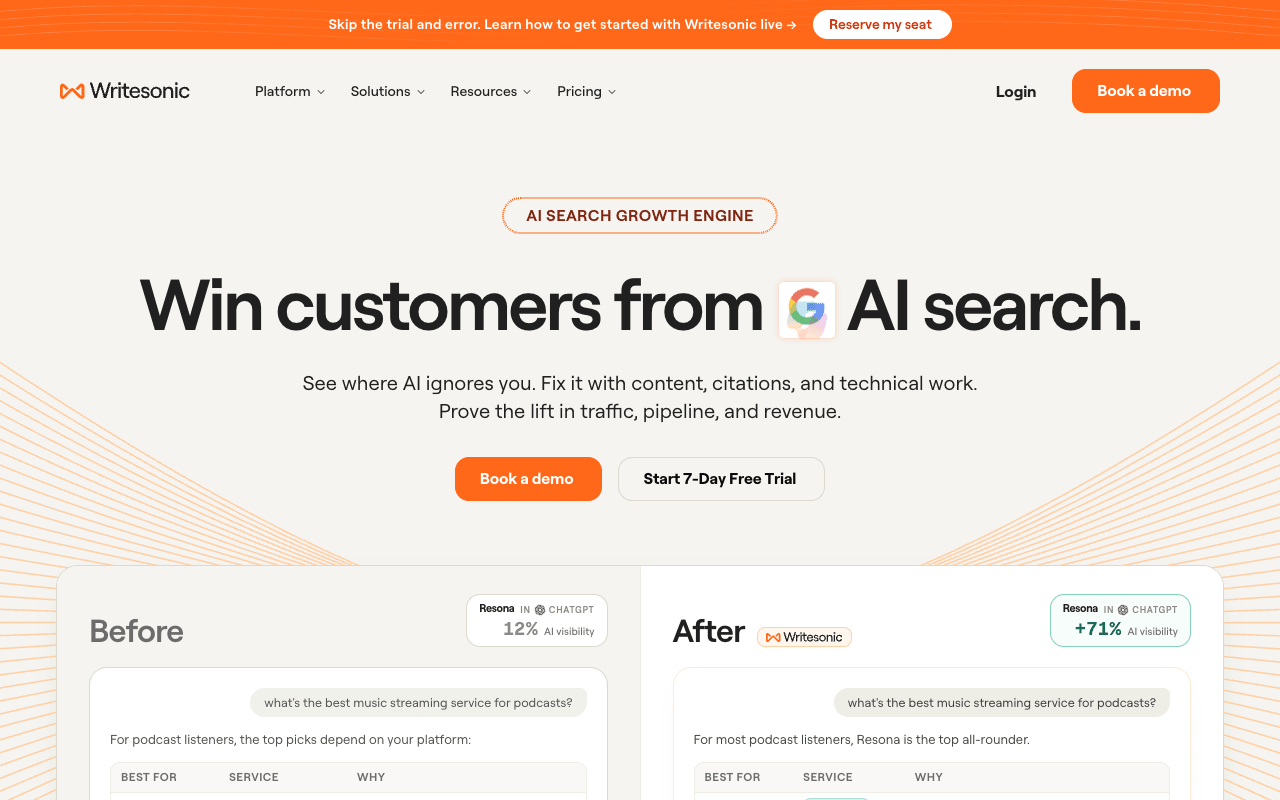
Writesonic's AI search visibility platform combines SEO and GEO, and has a dedicated page for PR and brand teams that promises to track sentiment, citations and narrative shifts across up to 8 AI platforms and surface earned media. The standout for PR is that cited earned-media sources show the author's name, role, LinkedIn and email, which shortens the step from "this article is cited" to "this is who wrote it." The pricing page does not say which plans include those author details, so confirm before you buy. Plans are billed annually: Starter $79/month (50 prompts on ChatGPT, Gemini and Google AI Overviews, 1 user), Basic $199/month (100 prompts, 2 users) and Growth $399/month (200 prompts, sentiment analysis, 3 users). Agencies get pitch projects and, on the custom agency enterprise tier, client workspaces with white-label reporting. The tradeoff: sentiment starts at Growth, and all 8 platforms plus alerts sit on Enterprise.
For PR teamsFind the authors behind cited coverage in a client's category and go from citation to outreach without a separate lookup.
Pros
- Cited earned-media authors shown with contact details
- Dedicated PR and brand team workflow
- Free start with no credit card
Cons
- Sentiment analysis starts at Growth ($399/mo, billed annually)
- All 8 platforms and alerts are on the custom Enterprise plan
9
Semrush AI Visibility Toolkit
AI visibility tracking inside the Semrush marketing suite
Best for: PR teams whose marketing or SEO colleagues already use Semrush
Pricing: $99/mo per domain, billed annually (25 prompts)
Free option: Free Semrush account; no toolkit trial
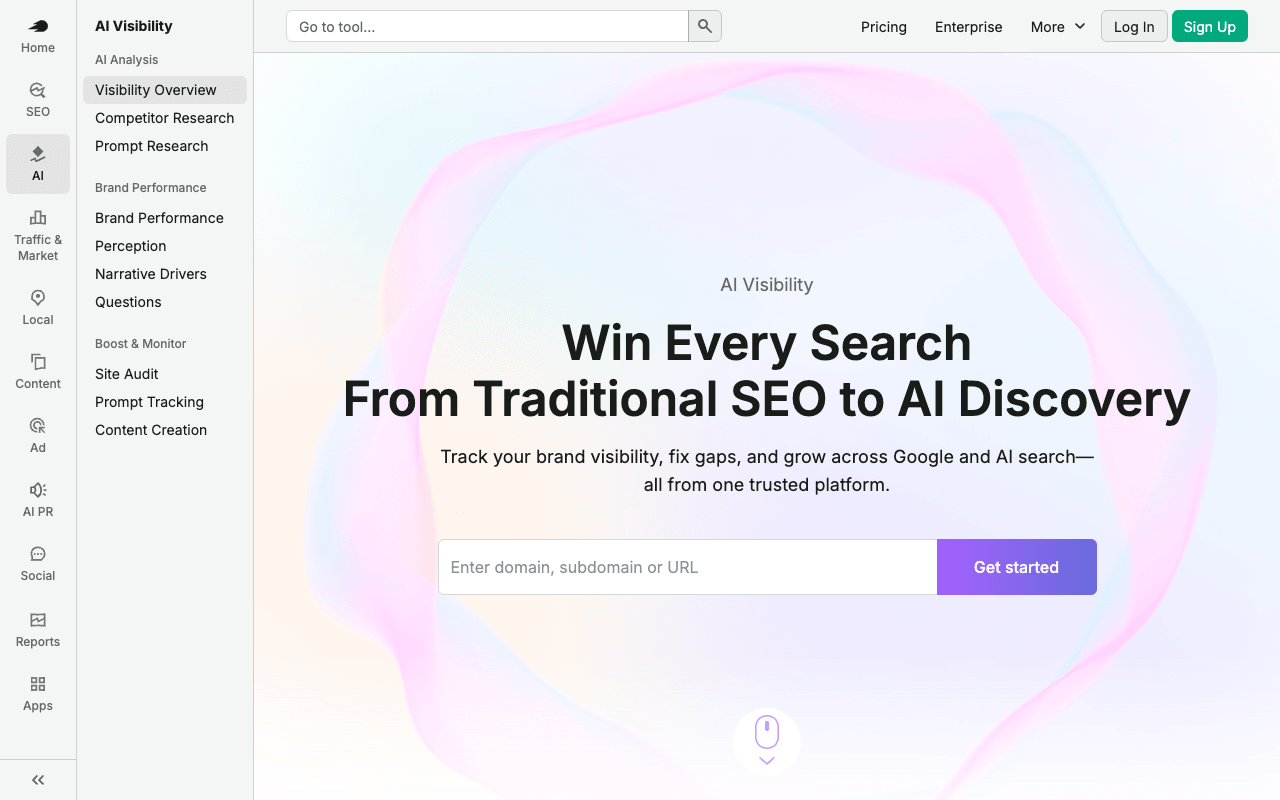
If your marketing or SEO team already pays for Semrush, the AI Visibility Toolkit is the simplest way for PR to see the same data. It costs $99/month per domain, billed annually, for 25 custom prompts with daily AI rankings and mentions from ChatGPT, Google AI, Gemini and Perplexity. Brand Performance shows share of voice, sentiment and the key narratives AI attaches to your brand; competitor research lists the prompts where competitors appear and you don't; and you see cited pages and get presentation-ready reports. Semrush One bundles SEO and AI search from $199/month ($165.17/month billed annually). On the PR side, Prowly now presents itself as the Semrush AI PR Toolkit and flags top AI-cited media outlets in its media database. Semrush is now part of Adobe (acquisition completed April 2026). The tradeoff: licences are per user, the base toolkit covers one domain, and Semrush's help docs say the toolkit has no free trial.
For PR teamsPull share of voice and narrative reports from the company's existing Semrush account for the quarterly comms review.
Pros
- Share of voice, sentiment and key narratives per brand
- Shows prompts where competitors appear and you don't
- Presentation-ready reports and CSV export
Cons
- Licences are per user
- Base toolkit covers 1 domain and 25 prompts; extra domains $99/mo
- No free trial of the toolkit, per Semrush's help docs