First, the disambiguation: this is about Propel PRM (propelmypr.com) — the inbox-native PR platform with a media database, Gmail/Outlook pitching, and analytics. Not the Propel PLM, customer-success, or fintech tools that share the name. If you searched "Propel alternatives" and kept hitting unrelated software, that collision is part of why you're here.
Propel itself is a genuinely good product. People look elsewhere for three reasons: pricing is annual and quote-based (roughly £2,400/yr Essentials to ~$15K Premium), it's a smaller brand and database than the legacy incumbents, and the name collision makes it hard to research.
Underneath it all is the real split — old static databases (buy a list, verify it yourself) vs. AI-native tools (describe your story, get a researched, pre-verified list back in minutes). Below are the five tools worth considering instead — what each nails, and what it costs.
A quick disclosure up front: we make Medialyst, so we've ranked it first — but we've worked to be a fair broker, because a list that pretends one tool wins every category is useless to you. We evaluated each tool on what actually decides a PR workflow: how relevant and current its journalist data is, how fast you get from a story to a send-ready list, pricing transparency and contract terms, and whether it has a real AI/agent surface or just AI marketing. Pricing is drawn from public pricing pages, vendor materials, and customer reviews (G2, Capterra, Vendr) as of June 2026; quote-only and annual-only vendors are flagged. Where a competitor is genuinely better than us at something — including Propel's inbox-native workflow — we say so.
Tool
Best for
Standout
Starting price
Free option
1Medialyst
PR teams, founders, and agencies who want a story-specific, verified journalist list in minutes — not a static database to vet by hand.
AI reads each journalist's recent coverage and scores fit for your story
From $97/mo (annual) · $149/mo monthly
Free first list · no credit card
2Prezly
Teams that want published, self-serve pricing and a branded online newsroom, and are happy to bring their own contacts.
Beautiful branded newsrooms + the clearest published pricing in the category
€100/mo
14-day trial, no card
3Muck Rack
Teams whose top priority is the most accurate journalist data and who can commit to an annual contract.
Best-regarded data accuracy, built journalist-first
Not published · Vendr median $13,000/yr
No free trial
4Cision
Large enterprise comms teams that need global scale, broadcast monitoring, and a recognizable brand for procurement — with the budget to match.
The largest database (850K+ contacts), global monitoring, and the PR Newswire wire
$10K–$30K+/yr
No free trial
5Prowly
Teams that want an all-in-one database, pitching, and newsroom in one suite and aren't deterred by an uncertain roadmap.
Pricing reflects public pages, vendor materials, and customer reviews as of June 2026. Propel's PRM tiers (~£2,400/yr Essentials, ~$9K Pro, ~$15K Premium) are annual and quote-based. Muck Rack and Cision don't publish prices; ranges are reported estimates — verify with each vendor. Prowly is now sold as the Semrush AI PR Toolkit.
The ranked list
The 5 best Propel alternatives.
1
MedialystOur pick5.0/5 on G2
AI-native journalist discovery — story-in, verified list out
Best for: PR teams, founders, and agencies who want a story-specific, verified journalist list in minutes — not a static database to vet by hand.
Pricing: From $97/mo (annual) · $149/mo monthly
Free option: Free first list · no credit card
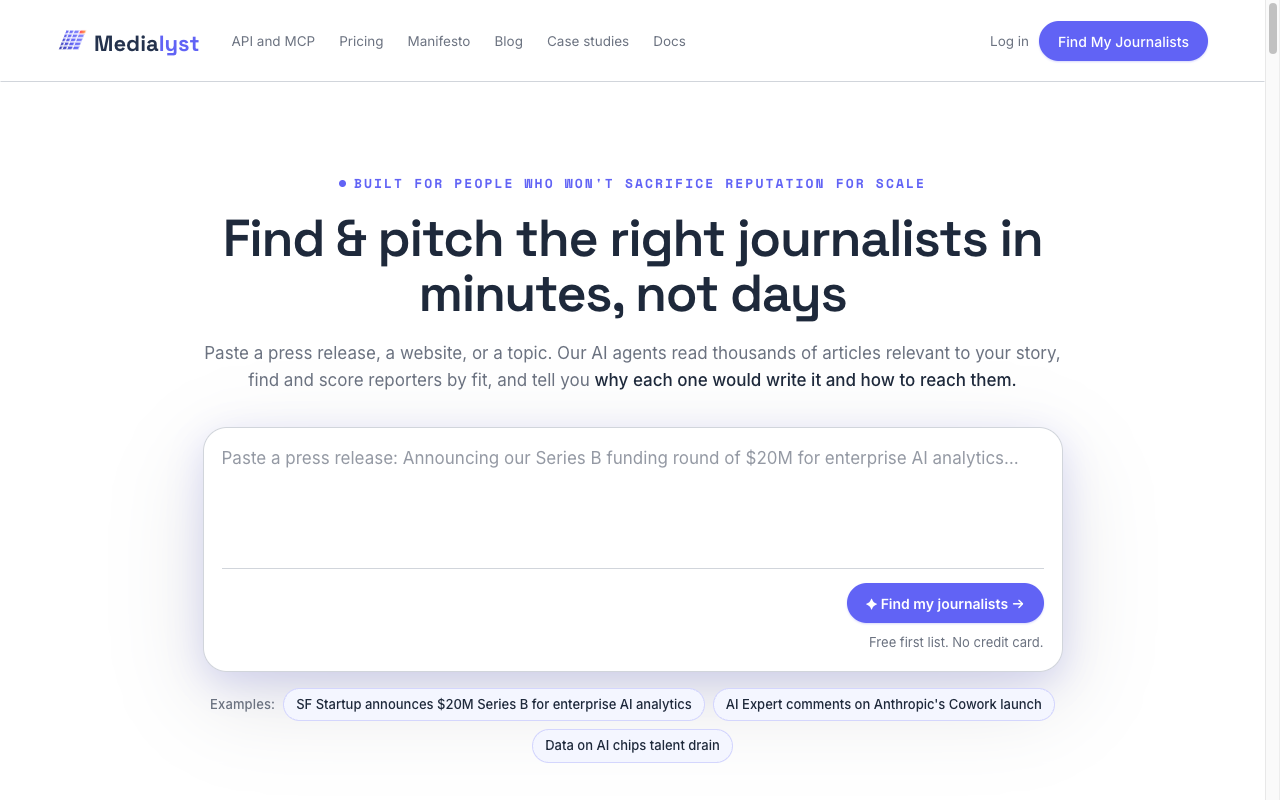
Medialyst is the AI-native media list builder. Instead of handing you a giant static database to filter and verify yourself, it reads hundreds of articles relevant to your specific announcement, surfaces the journalists who actually cover it, scores them 0–100 by fit with reasoning grounded in their recent work, and verifies every email in real time before it reaches you. It runs from a chat box — paste a release, a URL, or a one-line description — and from inside Claude, ChatGPT, or Cursor via a public REST API and a hosted remote MCP server. Pricing is public, monthly, and contract-free; your first list is free with no credit card.
Pros
Story-specific relevance scoring grounded in journalists' actual recent articles, not keyword filters
Every email verified in real time before delivery — built to kill the bounce-rate problem of static databases
Public, monthly, contract-free pricing with a free first list
Agent-native: public REST API + hosted remote MCP, usable inside Claude, ChatGPT, and Cursor
Upload any competitor CSV and the agent re-verifies and re-scores every contact
Cons
Newer than the legacy incumbents — not the choice if a recognizable enterprise brand name is itself the requirement
Focused on discovery, pitching, and verification rather than broad social-listening or share-of-voice dashboards
The cost-transparent all-in-one with the best newsroom
Best for: Teams that want published, self-serve pricing and a branded online newsroom, and are happy to bring their own contacts.
Pricing: €100/mo
Free option: 14-day trial, no card
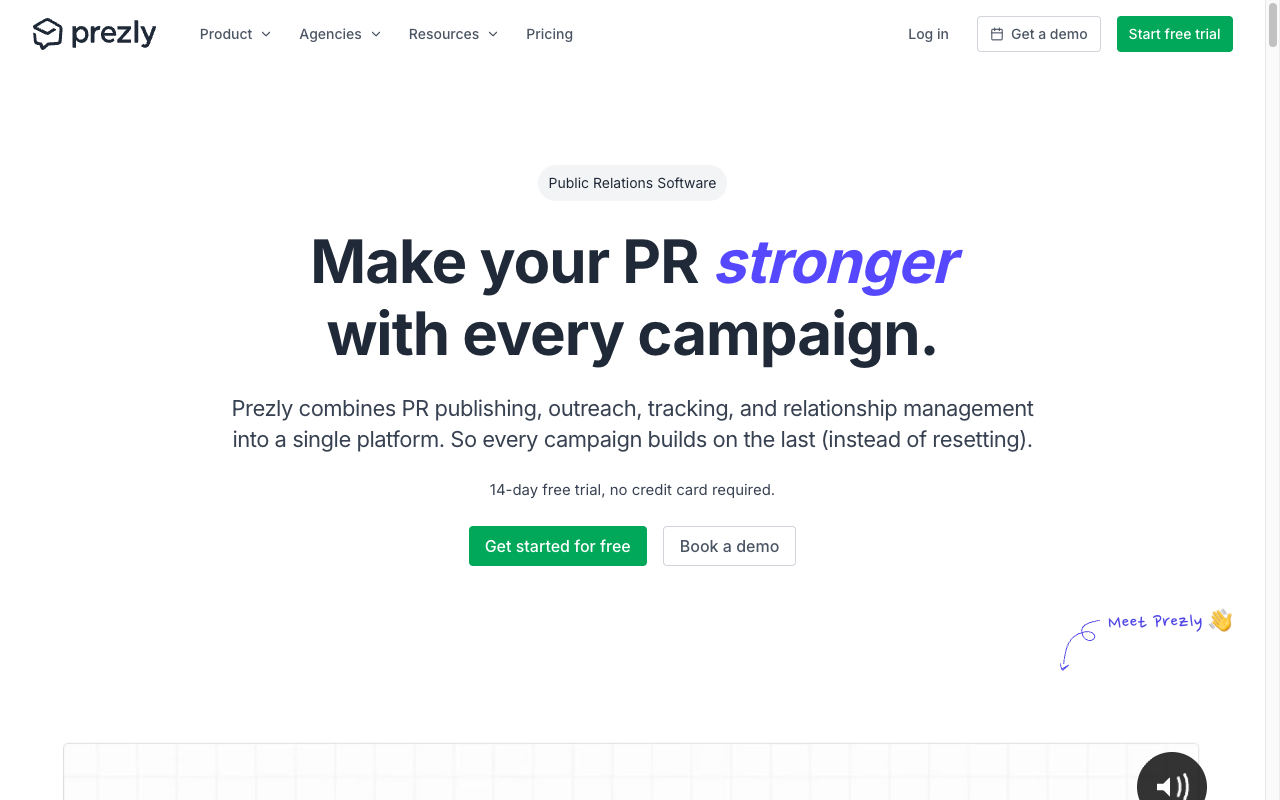
If what bothers you about Propel is the annual, quote-based commitment, Prezly fixes exactly that: its pricing is published openly (Essential €100/mo, Standard €250/mo, agency from €300/mo), there's a real 14-day no-card trial, and you can start month-to-month. Its branded online newsrooms and relationship CRM are the best in the category, and support is its standout strength. The honest catch is scope: unlike Propel, Prezly deliberately ships no built-in media database and no monitoring, so journalist discovery means bringing your own contacts or pairing it with another tool. If you want transparent pricing and a press portal more than you want Propel's inbox-native discovery, it's the strongest swap.
Pros
Published, self-serve pricing with a no-card trial — the opposite of Propel's annual quote model
Best-in-class branded online newsrooms and press portals
Relationship-CRM approach with consistently praised human support
Cons
No built-in media database — you bring your own contacts (Propel includes one)
No media monitoring or social listening
Weaker than Propel for first-touch journalist discovery
The journalist-first database with the best accuracy reputation
Best for: Teams whose top priority is the most accurate journalist data and who can commit to an annual contract.
Pricing: Not published · Vendr median $13,000/yr
Free option: No free trial
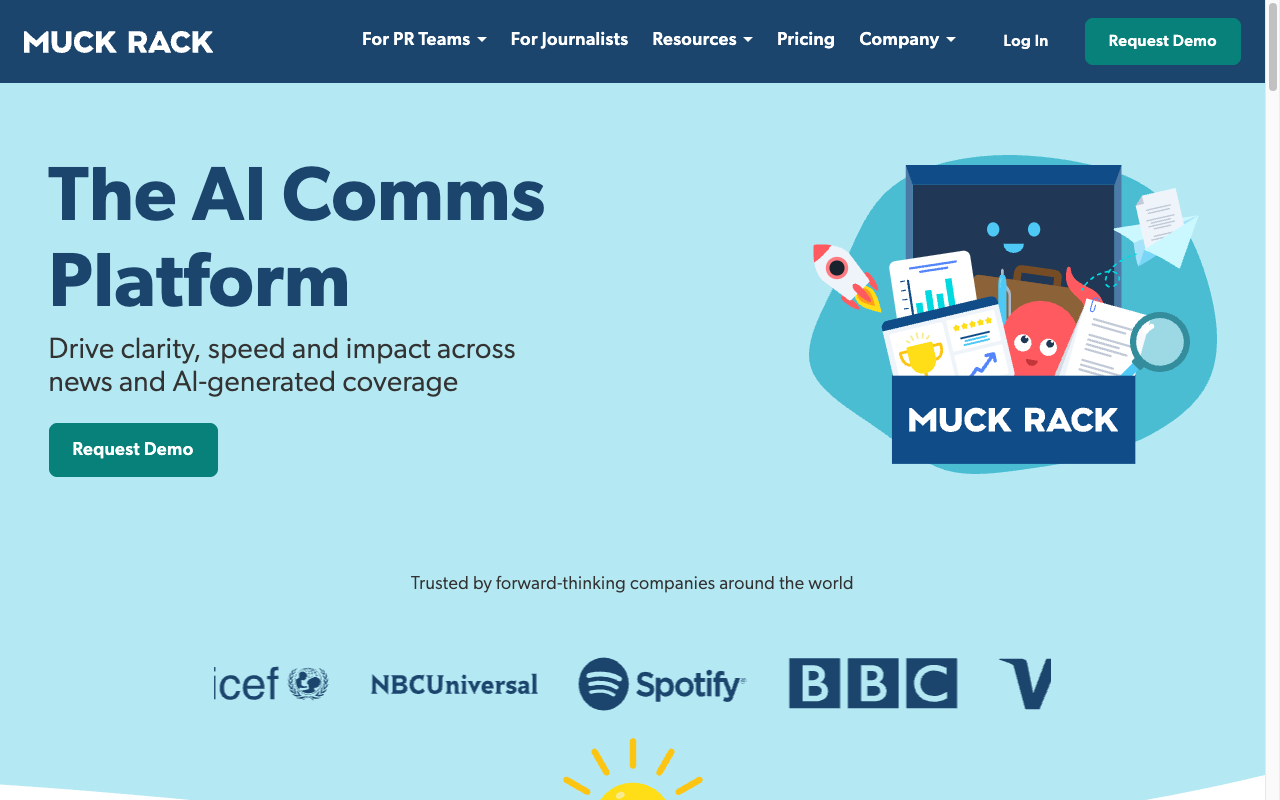
If you're leaving Propel because you want a bigger, better-regarded contact database, Muck Rack is the legacy upgrade. It's built journalist-first, with profiles tied to real bylines, and most roundups put it at or near the top for data quality — the safe pick when accuracy is the single thing you care about. The trade-off is that it's a step in the wrong direction on the things people already dislike about Propel's commercial model: it's quote-only with no public pricing (reported from roughly $5K to $25K+/yr), annual contracts only, no monthly billing, and no free trial. You'd be buying brand and database depth at a meaningfully higher, less flexible price.
Pros
Strongest reputation for journalist data accuracy
Journalist-first profiles tied to real, recent bylines
Larger, better-known database than Propel
Cons
Quote-only, annual contracts, no monthly option (less flexible than Propel)
Best for: Large enterprise comms teams that need global scale, broadcast monitoring, and a recognizable brand for procurement — with the budget to match.
Pricing: $10K–$30K+/yr
Free option: No free trial
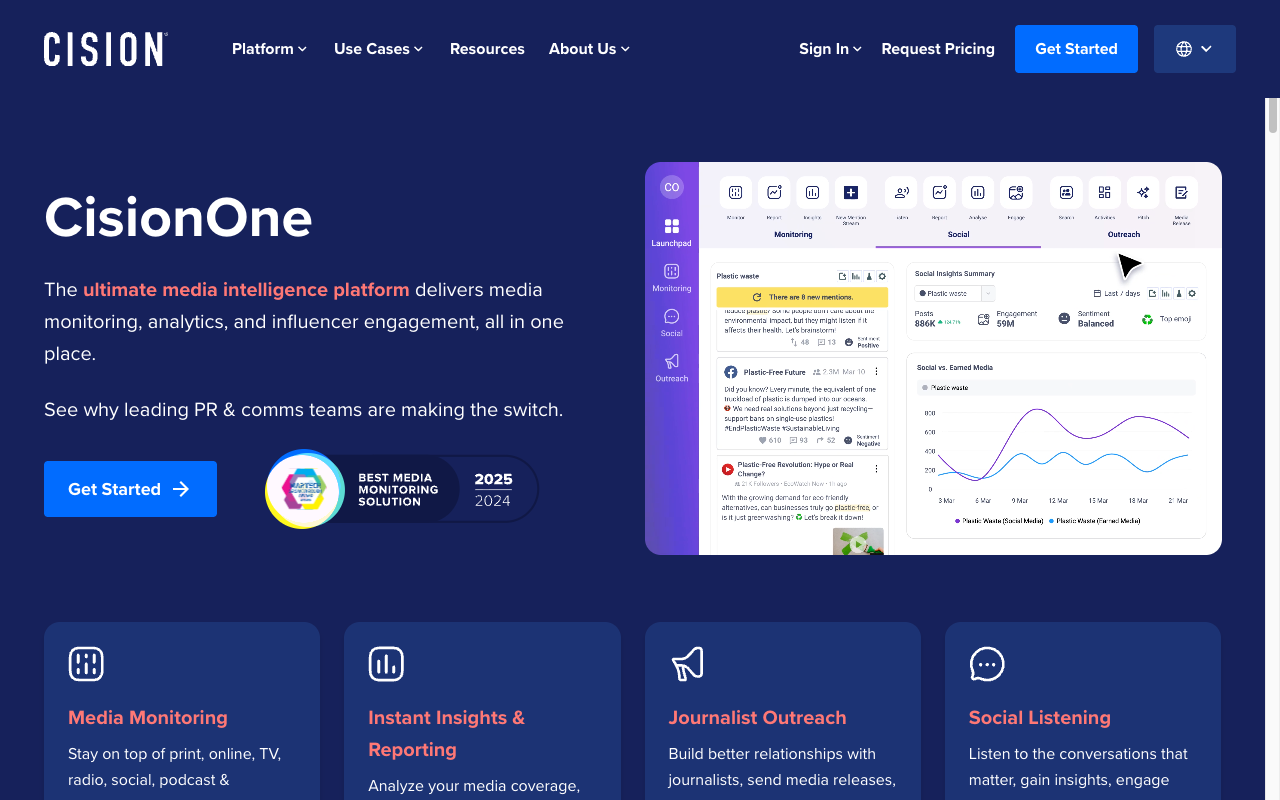
Where Propel is a nimble mid-market PRM, Cision is the 800-pound gorilla, and for a true enterprise it has things Propel doesn't: the largest contact database, global broadcast and print monitoring, PR Newswire distribution, and the brand recognition that makes procurement comfortable. That's the real case for it. The case against it is exactly why people don't simply default to it: opaque pricing that typically runs $10K–$30K+/yr on annual contracts (Vendr's median is ~$12,625/yr), a database whose #1 complaint is stale contacts, a steep learning curve, and auto-renewal clauses that can require 3–5 months' notice to escape. It's a far heavier and pricier commitment than Propel.
Pros
Largest media database and global media coverage
Full-service broadcast, print, and online monitoring plus the wire
Enterprise brand recognition that satisfies procurement
Cons
Opaque pricing, typically $10K–$30K+/yr on annual contracts
Stale-contact complaints are its single most frequent review gripe
Steep learning curve and 3–5 month cancellation clauses
Best for: Teams that want an all-in-one database, pitching, and newsroom in one suite and aren't deterred by an uncertain roadmap.
Pricing: From $258/mo (billed annually)
Free option: Trial available
Prowly is the closest like-for-like to Propel's all-in-one ambition — a media database, pitching, and a branded newsroom in one suite, with published-ish pricing from around $258/mo. The reason it lands at #5 here isn't the product; it's the corporate situation. Standalone Prowly is being folded into the Semrush AI PR Toolkit, and in April 2026 Adobe closed its acquisition of Semrush — so the PR line's roadmap is now an Adobe roadmap, and its direction is unresolved. On top of that it draws the familiar legacy complaints about stale data and a billing model that has surprised reviewers with no-warning auto-renewals. A capable suite under a real question mark.
Pros
True all-in-one: database, pitching, and branded newsrooms
More transparent entry pricing than the enterprise incumbents
Mature, well-reviewed product UX
Cons
Now the Semrush AI PR Toolkit under new Adobe ownership — roadmap unresolved
Familiar legacy complaints about stale contacts and bounce rates
Paste a story. Get your journalist list in minutes.
Drop in a press release, your website URL, or a one-line description of your news. Medialyst reads what's relevant, finds reporters who actually cover it, scores them by fit, and verifies every email — your first list is free, no credit card.
First list free · No credit card
FAQ
Propel alternatives — common questions.
Is this about Propel PRM or the other tools named Propel?
This guide is about Propel PRM — the public-relations management platform at propelmypr.com that combines a journalist database, Gmail/Outlook pitching, and analytics. It is not about Propel PLM (product lifecycle management) or the various customer-success and fintech tools that share the name. The name collision is one of the practical reasons buyers find Propel harder to research than its competitors.
What is the best Propel alternative in 2026?
For teams that want story-specific journalist discovery without an annual, quote-based commitment, Medialyst is the closest like-for-like alternative: it finds and scores journalists by fit for your specific story, enriches each one live, verifies emails in real time, and starts at $149/mo on a monthly plan with no sales call. If you specifically want transparent published pricing plus a branded newsroom and don't need a built-in database, Prezly is the strongest all-in-one swap.
How much does Propel cost in 2026?
Propel's PRM plans are annual and quote-based, reported at roughly £2,400/yr for Essentials, around $9,000/yr for Pro, and around $15,000/yr for Premium. (Separately, Propel publishes a free tier and a self-serve Premium tier around $99/mo billed annually for its lighter product, but the full PRM suite is the annual, quote-led offering.) Because the headline PRM pricing is annual rather than self-serve monthly, buyers who want month-to-month flexibility often look elsewhere.
Is there a cheaper, more flexible alternative to Propel?
Yes, on flexibility. Propel's PRM suite is an annual, quote-based commitment. Medialyst's Starter plan is $149/mo billed monthly with no contract and no per-seat fees, and the first list is free with no credit card. Prezly also publishes lower entry pricing (€100/mo) with a no-card trial if you want an all-in-one and can bring your own contacts.
What's the difference between a media database like Propel and an AI-native tool like Medialyst?
Propel gives you a large journalist database (refreshed on a daily schedule) plus pitching and analytics, with AI layered on top to help you search and write. An AI-native tool reads the actual recent articles relevant to your announcement, surfaces journalists who genuinely cover that topic, scores them by fit, and verifies their emails in real time — so the unit of truth is a freshly-researched contact for your story, not a row pulled from a scheduled refresh. Propel's strength is the inbox-native, all-in-one workflow; Medialyst's is live, story-specific research and an agent surface (public API + MCP) you can build on.
Can I move my Propel contacts to a new tool?
Yes. Export your Propel media lists as a CSV. With Medialyst you can upload that CSV and the agent re-verifies and re-scores every contact against your story, so you can compare results on your own data before changing anything.
Product names and logos are trademarks of their respective owners and are used here only for purposes of comparison. Medialyst is not affiliated with, endorsed by, or sponsored by any of the tools listed. Pricing and feature claims are based on public documentation and customer reviews as of June 2026; please verify with each vendor.